Wednesday, July 30, 2014

Another Omega Public Relations smokescreen


 Scooping up pogies  faster and easier than ever before, send the old ships to the gulf and add a couple of really nice BIG ones to the Mid Atlantic fleet... here's one of two of Omega's latest fleet additions docked in Reedville, VA


In a recent article in The National Fisherman*, (a commercial fishing magazine) Omega Protein Corporation public relations officer bemoans recently implemented regulations aimed at restoring and rebuilding stocks of the most important fish in the sea.

One would think that a company that claims to be such a caring, responsible steward of the waters would embrace conservation measures with open arms. The measures not only provide an assurance of an abundant catch in the future as well as added job security for their employees, but also a bonus of being able to fish closer to home, cutting fuel costs and adding even more profit to the bottom line. Business is booming for Omega right now, so it’s hard to believe they would bother focusing on the negative instead of the bounty before them. By making some very clever company acquisitions, market diversification and cost cutting measures, Omegas stock (OME) has gone from $4 per share to over $14 per share over the past 5 years!

Instead, once again, Ben Landry, Omega's suited up PR director climbs down from his perch above the commoners of Reedville to poke at a blog post** by Peter Baker of Pew Charitable trust which heralds the successful implementation of the first ever catch limits in 2013. 
Mr. Landry tactfully draws the readers focus to a couple of states (NY & MD) that did not reduce their landings in 2013, one through a “bycatch” loophole for pound nets and the other through a “quota swap.”   While I agree that all states MUST comply with the new measures and provide accurate data to the ASMFC, I find it peculiar that Mr. Landry is even concerned about an amount of bunker that would be a mere fish stain on the deck of a 190 foot long Omega factory ship.


It’s more important now than ever before to remember that on that fateful December day back in 2012, Omega was in fact, granted the lion share of all the bunker on the east coast, a full 85+% of the total harvest went to Virginia, leaving other states bait harvesters along the coast to fight over the scrappy percentage left behind. For the life of me, I can't believe that the Reedville watermen themselves, would screw over fellow baymen , especially in these hard times. These fishermen literally share the same waters, yet the corporation acts in complete disregard of baymen gathering fresh bait out of pound nets right across the bay. Would it have been so hard to give up just a few more tons to help out the little guys in MD or NY?

This is just the tip of the iceberg for selfish Omega, as they will do just about anything to build profits and keep stock prices soaring and in turn, shareholders happy. What gets very little notice in the media is that when these giant ships move into an area and proceed to fill up the hull, they leave a void behind. With all the bait fish removed, the gamefish move off, and the local fisherman that depend upon a healthy stock of gamefish to provide a day’s catch are screwed.  All of us on the water know "localized depletion" well, and Omega could care less. 

Whether operating in the mid Atlantic or in the Gulf of Mexico (where there are still no catch limits) anglers and the eco system are always left with the short end of the stick. The industrial scale and rate of removal of these talented ship captains and spotter plane pilots is second to none. Make no mistake about it, this is the largest commercial fishery, in numbers of fish, in the USA and this type of fishing, day after day, leaves nothing but slimy smelly foam in its wake.

Mr. Landry continues to distract  from the facts of doing business as usual. Distracting investors away from the fact that in 2012, execs got $900,000 worth of bonuses while the average Reedville boatman was paid $35,000 for the whole season. Omega execs are lining their pockets with this overflow due in part to more than 50% of the American baitfish that they scoop up are ground up and shipped to China's booming aquaculture industry. This end of the business, while less profitable than the human nutrition end of things, is projected grow at the rate of more that 8-10% a year right on thru until cheap Chinese labor runs out.

The bottom line is that Omega Protein Execs continue to reap  profits from a free American resource, while exploiting the bottom rung of the food chain, and, in turn, fellow Americans that depend on healthy waters to make a living. The time has come to put an end to the antiquated practice of harvesting vast quantities of forage fish, reducing them to oil and meal, and taking meals away from the very fish that we rely upon for food and sport.  (Virginia is the only East Coast State which still allows reduction fishing).  

Leaving an imbalanced ecosystem and too little  food for predator fish or marine life in the water is about as selfish a corporate act as I can imagine. It’s clearly time for Omega to diversify and re invest in sustainable, organic protein/Omega-3 sources, from algae, flax seed, soy, camelina etc. and to finally become the good corporate citizen that they say they are.


* http://ww1.prweb.com/prfiles/2014/07/22/12038470/Ben%20Landry%20-%20Pew%20imprecise%20on%20pogies%20-NF_Aug14_OnDeck.pdf
** http://www.talkingfish.org/opinion/atlantic-menhaden-catch-cap-a-success-millions-more-of-the-most-important-fish-in-the-sea

http://www.prweb.com/releases/omegaproteinbenlandry/nationalfisherman/prweb12038470.htm


Tuesday, May 7, 2013

Support Menhaden Defenders get your T Shirts and Bumper stickers now!


We are excited to announce that local fishing club donations have enabled us to finally offer these long awaited shirts and stickers! 
Your purchase will directly fund our continuing efforts to fight against exploitation of our Atlantic Menhaden stocks (aka Bunker & Pogy) and continue our work to rebuild stocks back to historic levels.

Long and short sleeve shirts are available.
Shirts are quality ultra cotton light gray and printed 3 color on the back and left arm.
Stickers are 8" long, die cut striped bass shape, full color, 3M outdoor quality

Short sleeve shirts $20
Long sleeve shirts $30
Please add $5.00 to cover U.S.P.S for shirts

Stickers $5 each >>> 2 for $8 and 3 for $12  (no postage)

You can use paypal, just go to www.paypal.com
enter email address captpaul@menhadendefenders.org
and follow instructions from there.
OR if you prefer to just mail a check, email us
Check made out to "Menhaden Defenders"
and be sure to include email and mailing address, quantity and sizes desired

Thank You in advance for your support and helping to spread the word.
No Bunker = No Bass!!

Capt. Paul Eidman
Menhaden Defenders

Please follow us on Facebook and Twitter

Saturday, November 3, 2012

Grinding up our fishing future for China


Omega Protein Inc. located in Reedville, Virginia,USA is very busy these days, quietly exporting tons of our most vital forage fish to China and other countries. Atlantic Menhaden are the backbone of America’s east coast marine ecosystem and coastal recreational fishing business.  Omega is the only company left that still grinds up these fish, also known as bunker, down to fishmeal and oil in a procedure called “reduction”.  From Omega’s Reedville location alone they catch, process and reduce over 160,000 metric tons annually of our east coast native menhaden.


As the world’s population increases, so does the demand for fish. People don’t eat menhaden directly, but many of the fish that we commonly eat are farmed fish that are fed menhaden as fishmeal and oil. Omega Protein is strategically positioned to profit from this exploding aquaculture market.(fish farming)


Americans are eating a lot of fish, but now that over 80% of the fish consumed by Americans now comes from overseas fish farms.  Top sellers like farm raised shrimp, salmon, tilapia and Swai or Basa (Pangasious catfish) are fed mass quantities of the menhaden based, protein packed pellets that accelerate growth and get them to market faster.


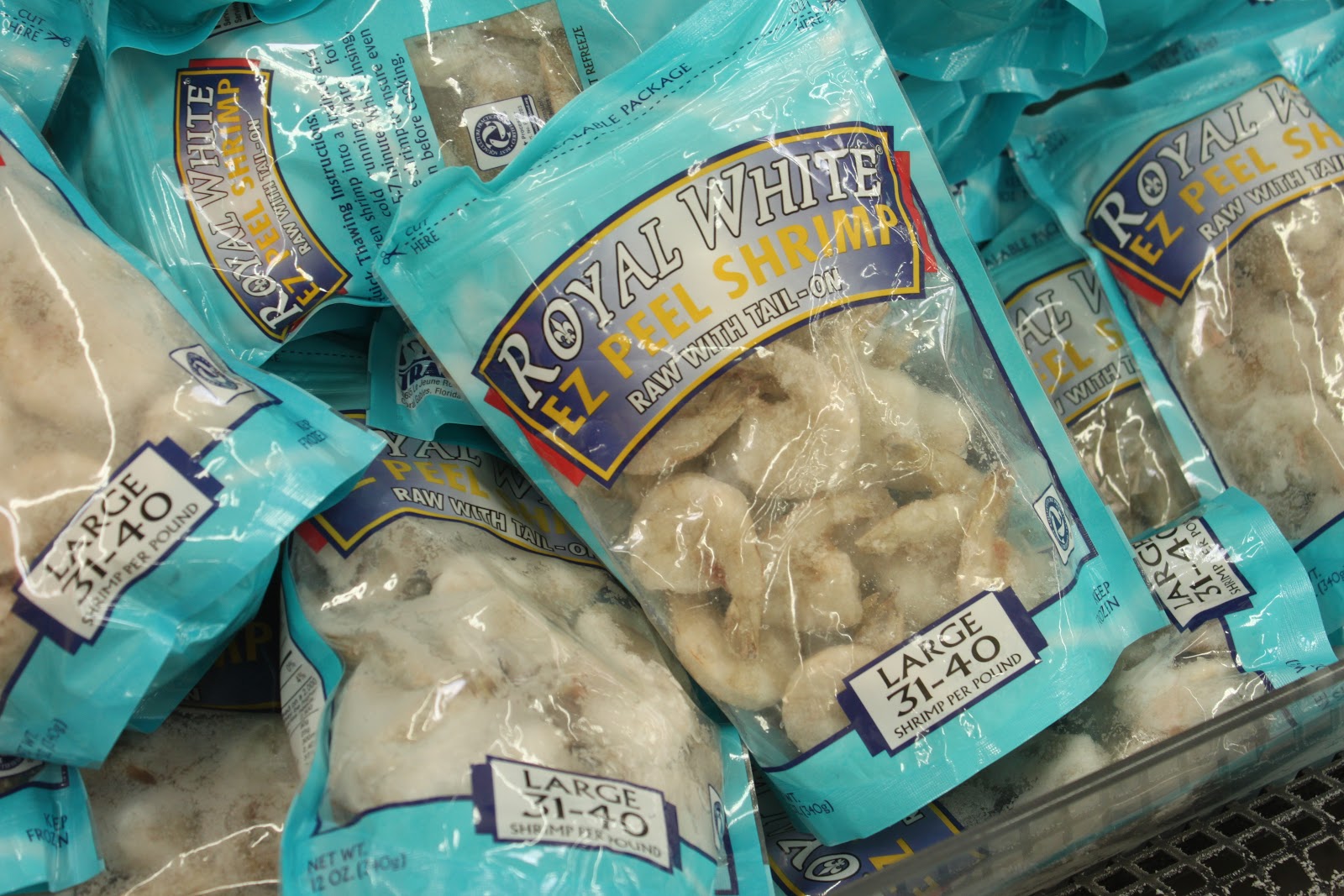
As if depleting our marine food chain wasn’t enough, the majority of these fish are raised in deplorable, unregulated, contaminated, sewer-like conditions and are then processed with cheap labor, flash frozen and shipped back to American supermarkets and big box stores like Wal Mart and many others. The FDA openly admits that with so much coming over the borders, proper quality control is impossible.


Menhaden are free for the taking and Omega’s captains and crew have become very efficient at catching them. Directed to the acre sized schools by spotter planes, smaller boats swiftly encircle them with a purse seine net, and position the load next to the ship, dropping a large vacuum pump into the penned fish and quickly suck them out. Up a massive hose and into the refrigerated seawater storage hold they go.


They specifically focus on the older, larger fish that bring in the most money.


Unfortunately, these are the same fish that produce the most eggs and determine the future of the menhaden and to our fishing.


Menhaden have historically ranged from Maine to Florida, but now with stocks at the lowest point in history, the upper and lower portions of the biomass are gone and now predominantly left in the Mid to upper Atlantic region, roughly from Cape Cod to the Carolinas. You don’t have to be a marine biologist to see that something is very wrong here, the writing is on the wall and it reads “Warning- biomass collapse level reached-reduce catch now or pay the price later”


Insisting that they are operating a “sustainable operation”, publicly held Omega protein has clearly taken a blind eye to this and continues to vacuum up the very fish that provide essential nutrition for Striped Bass, Bluefin Tuna, Weakfish and many other fish and marine mammal species that occupy the top strata of the marine food chain. Company spokesmen continue to boast that spotter plane pilots are seeing more bunker than ever before, while tuna fishermen in New England and fishermen in Florida havent seen abundant adult schools in years.  ASMFC scientific study teams have released data that concluded that Atlantic menhaden overfishing has been occurring for 52 of the past 54 years, regardless of this, Omega Protein continues to selfishly profit from this wild resource while our fishing related businesses along the coast go bust.


A 2010 study by the economic James Kirkley at the Virginia Institute of Marine Resources found that the reduction industry has an $88 million economic impact on the Chesapeake Bay region, supplying 300 jobs at Omega Protein, and 219 jobs in industries supported by the reduction fishery. But those figures pale in comparison to recreational fishing activities, which have a $332 million economic impact in Virginia and Maryland, and supports 3,500 jobs in those two states alone.


Sadly, Menhaden are one of the few fish left that remain unregulated, yes, there is no limit on the amount of these fish that can be caught. But, this is about to change and you can do something about this insanity and help to change the way Omega does business.The Atlantic States Marine Fishery Commission (ASMFC) will vote to put catch limits on this fishery on December 14th. The outcome of this vote will tell all of us if the ASMFC truly cares about our sport, our jobs, and our environment. Visit the website MenhadenDefenders.org and just click on the menhaden.


Grinding up our fishing future for China

Thursday, October 25, 2012

Grinding up our fishing future for China


Omega Protein Inc. located in Reedville, Virginia,USA is very busy these days, quietly exporting tons of our most vital forage fish to China and other countries. Atlantic Menhaden are the backbone of America’s east coast marine ecosystem and coastal recreational fishing business.  Omega is the only company left that still grinds up these fish, also known as bunker, down to fishmeal and oil in a procedure called “reduction”.  From Omega’s Reedville location alone they catch, process and reduce over 160,000 metric tons annually of our east coast native menhaden.
As the world’s population increases, so does the demand for fish. People don’t eat menhaden directly, but many of the fish that we commonly eat are farmed fish that are fed menhaden as fishmeal and oil. Omega Protein is strategically positioned to profit from this exploding aquaculture market.(fish farming)


Americans are eating a lot of fish, but now that over 80% of the fish consumed by Americans now comes from overseas fish farms.  Top sellers like farm raised shrimp, salmon, tilapia and Swai or Basa (Pangasious catfish) are fed mass quantities of the menhaden based, protein packed pellets that accelerate growth and get them to market faster.  
As if depleting our marine food chain wasn’t enough, the majority of these fish are raised in deplorable, unregulated, contaminated, sewer-like conditions and are then processed with cheap labor, flash frozen and shipped back to American supermarkets and big box stores like Wal Mart and many others. The FDA openly admits that with so much coming over the borders, proper quality control is impossible.

Menhaden are free for the taking and Omega’s captains and crew have become very efficient at catching them. Directed to the acre sized schools by spotter planes, smaller boats swiftly encircle them with a purse seine net, and position the load next to the ship, dropping a large vacuum pump into the penned fish and quickly suck them out. Up a massive hose and into the refrigerated seawater storage hold they go.
They specifically focus on the older, larger fish that bring in the most money.


 Unfortunately, these are the same fish that produce the most eggs and determine the future of the menhaden and to our fishing.


Menhaden have historically ranged from Maine to Florida, but now with stocks at the lowest point in history, the upper and lower portions of the biomass are gone and now predominantly left in the Mid to upper Atlantic region, roughly from Cape Cod to the Carolinas. You don’t have to be a marine biologist to see that something is very wrong here, the writing is on the wall and it reads “Warning- biomass collapse level reached-reduce catch now or pay the price later”

Insisting that they are operating a "sustainable operation", publicly held Omega protein has clearly taken a blind eye to this and continues to vacuum up the very fish that provide essential nutrition for Striped Bass, Bluefin Tuna, Weakfish and many other fish and marine mammal species that occupy the top strata of the marine food chain. Company spokesmen continue to boast that spotter plane pilots are seeing more bunker than ever before, while tuna fishermen in New England and fishermen in Florida havent seen abundant adult schools in years.  ASMFC scientific study teams have released data that concluded that Atlantic menhaden overfishing has been occurring for 52 of the past 54 years, regardless of this, Omega Protein continues to selfishly profit from this wild resource while our fishing related businesses along the coast go bust.

A 2010 study by the economic James Kirkley at the Virginia Institute of Marine Resources found that the reduction industry has an $88 million economic impact on the Chesapeake Bay region, supplying 300 jobs at Omega Protein, and 219 jobs in industries supported by the reduction fishery. But those figures pale in comparison to recreational fishing activities, which have a $332 million economic impact in Virginia and Maryland, and supports 3,500 jobs in those two states alone.
 
Sadly, Menhaden are one of the few fish left that remain unregulated, yes, there is no limit on the amount of these fish that can be caught. But, this is about to change and you can do something about this insanity and help to change the way Omega does business.The Atlantic States Marine Fishery Commission (ASMFC) will vote to put catch limits on this fishery on December 14th. The outcome of this vote will tell all of us if the ASMFC truly cares about our sport, our jobs, and our environment. Visit the website Menhaden Defenders.org and just click on the menhaden.


Wednesday, October 17, 2012

You Can Help Restore Menhaden


Take action to help restore the Atlantic menhaden population to sustainable levels:


  1. Attend a public hearing in your state to show support for menhaden conservation. Check the dates here:
    Menhaden Public Hearings Calendar / Facebook Events

  2. Contact the Menhaden Management Board explaining that the menhaden landings must be cut by 50 percent:
    Atlantic States Marine Fisheries Commission

    Menhaden Management Board

    1050 N. Highland St., Suite 200 A-N

    Arlington, VA 22201

    Phone: 703.842.0740 / Fax: 703.842.0741
    comments@asmfc.org

  3. Call you Congressperson and ask him or her to support legislation to protect menhaden to fulfill the feeding needs of predators like striped bass, bluefish, humpback whales, and sharks:

    Find your House Representative and Senators

  4. Contact the editor of your local paper explaining why forage fish populations need to be protected through conservative management:
    List of Local News Papers by State

  5. Sign up to receive email updates from Menhaden Defenders and like us on Facebook:
    Email Signup / Menhaden Defenders on Facebook


You Can Help Restore Menhaden

Monday, October 15, 2012

TAKE ACTION: Menhaden Draft Amendment 2


€œThe most important fish in the sea has been put through more than 50 years of overfishing.


The stock is at a record low.  Who is suffering from the loss of menhaden? You are.

Striped bass, bluefish and other game fish have lost 90 percent of their favorite food source over the last 25 years alone.

In 1955, menhaden made up 77 percent of the diet of striped bass. Now, menhaden account for just 7 percent. Young striped bass are increasingly eating weakfish juveniles to supplement their diets, putting both stocks at risk. Bluefish eat 30 percent less menhaden than they did in the early €90s. As fisherman, we need to unite and let the ASMFC hear us loud and clear.

The public comment period is now open and it'€™s time to put the regulations into effect for the 2013 season.

Click the bunker to submit your comments to your Governor, Congress People, and the Fishery Management Plan Coordinator:


TAKE ACTION: Menhaden Draft Amendment 2

Wednesday, September 12, 2012

NJ fishing guide urges public to speak out against overfishing

My name is Capt. Paul Eidman and I am a New Jersey fishing guide on the Jersey shore. I’ve been on the water my entire life, as was my father, his father and my great grandfather. As a fishing guide, I depend on abundant schools of Menhaden, or Bunker as we call them to attract the striped bass, bluefish, weakfish and everything else clients fish for. Without bunker, our sport of saltwater fishing, as we know it would be ruined.  
Concerned fisherman and others always ask me what’s going on with the bunker. It’s a complicated subject, but to sum it all up, the story is that over the past 25 years we have lost over 90 percent of our bunker population to the unregulated netting by the commercial fishing fleet. Hard to believe that bunker are the only fish around that are still unregulated. These companies can take as many fish as they want. There are NO limits.

Onboard view of an Omega Industrial bunker haul

Small scale, traditional inshore bait seine netter
bunker are highly sought after by several bait netting companies in the Mid Atlantic for use as commercial lobster and crab bait, but by far the biggest volume of fish is taken by one company called Omega Protein Inc.

Omegas East coast division factory ships and spotting planes come out of a small port in Reedville, on the Virginia side of the Chesapeake bay. Omega is the only company lands a greater volume of fish than every other fishery in the United States. As we speak, Omega Protein is vacuuming up Menhaden from our coastal waters at the rate of over 150,000 tons per season. The company grinds the bunker into fish meal and oil, for use in a zillion products, including pet foods, animal feed and fish oil pills.
Chinese catfish sold as SWAI or BASA in America
Over 50% of Omega Proteins sales revenue come from Asia, which means that America’s fish are being ground up and shipped off to China. Fish that we eat all the time are raised in huge farms all over Asia. Farm raised Salmon, Tilapia, Shrimp, and Swai/Basa (catfish) are all fed American menhaden meal, while our stripers, blues and tuna starve in the Atlantic.
Tilapia fattened up on Menhaden Meal to get to market faster
To make things worse, when those Chinese fish are fattened up for the market, many are shipped back to the U.S. for consumers to purchase. Cheap bagged up frozen fish lining the end caps at Walmart or your local grocer have become the norm and economically depressed American families are buying them up nationwide. America’s fisherman could be the ones profiting from abundant bunker, but instead, our bait fish are shipped 7,000 miles away to feed tilapia.

Meanwhile, our gamefish are scrawny and hungry. 70% of the stripers in the Chesapeake bay have mycobacteriosis, or MYCO a life threatening disease related directly to malnutrition. There’s fewer bunker for everyone. Stripers are out competing weakfish for food and eating weakfish juveniles when they cant get enough Menhaden. Our ecosystem, fisherman and related business are going to go down in flames if we don’t cut back NOW on the numbers of bunker the industry catches.

MYCO lesions on a Striped Bass
Future sustainability depends upon a lot of things, but it all starts this fall. The Atlantic States Marine Fisheries commission (ASMFC) will be deciding just how much to cut back the menhaden catch. It’s up to you to stand up and let them know how important the bunker are to you. Tell them that you are expecting them to do the right thing and vote with mother nature and not against it.
Fresh Bunker in baskets for bait shops
A rebuilt, abundant stock of bunker would have immense benefits for small business up and down the coast, from bait and tackle stores to charter boats, marina operations and to independent fisherman using cast nets that supply our bait shops.
But if we don’t act, we risk collapsing our bunker population even further- with 90 percent already gone, how much more can we afford to sacrifice? We want our stripers and we want our blues- we need our bunker.

Omega fishing with no end in sight
Let’s stand together to make sure that corporate greed and lobbying don’t win over common sense. Reach out to us at the Menhaden Defenders website or on Facebook and get involved today. Follow us on twitter. Our ocean and fishing depends on you!